
Chasing Curiosity
Learning isn’t confined to a desk or a schedule. It’s a vibrant, living adventure that unfolds the moment a child asks, “Why?” Homeschooling gives you the freedom to put that question at the center of everything, transforming the entire world into an interactive classroom where curiosity is the only map you need.
We have modified our personal homeschool depending on our situation. When my mom was sick, we did homeschool at doctors offices. And part of it was researching basic medical things to make the situation less scary. When I dashed to pay the bills (delivery driving), we did homeschool in the car, everything digitized on my tablet and hers.
But it isn’t just where you do homeschool its how you learn. Everywhere has learning opportunities. At store we do math to stay in the budget. We talk about portions which is nutrition, household management, and a number of other interconnected skills. When We drive she asks me about the signs on the road. So now we play a game to identify them. When we were dashing she followed the map along on her phone learning navigational skills, reading the compass. These were mostly driven by her interests and the situations we found ourselves in. They weren’t planned…most of the time.
The World as Your Classroom
When you embrace chasing curiosity, a trip to the grocery store becomes a lesson in economics and nutrition. A walk in the park turns into a hands-on biology lab. A family vacation is an immersive dive into history, geography, and culture. This approach breaks down the artificial walls between “learning” and “living,” showing children that knowledge isn’t something you acquire; it’s something you experience.
This natural, integrated way of learning is supported by research. Studies show that homeschooled students often benefit from real-world learning experiences that lead to better academic outcomes and a more profound understanding of the subject matter2.
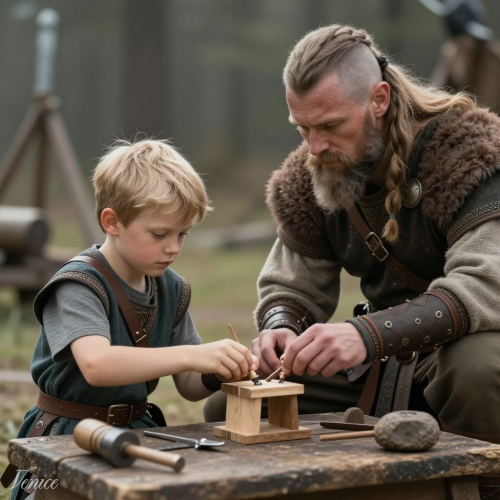
Nurturing the Inborn Drive to Learn
Children are born with an insatiable desire to understand their world. Traditional education can sometimes temper this fire with rigid curricula and standardized tests. Chasing curiosity does the opposite—it pours fuel on the flame.
By following a child’s interests, you empower them to take ownership of their education. This intrinsic motivation is a powerful catalyst for deep, meaningful learning that lasts a lifetime. It’s the difference between memorizing facts about ancient Rome for a test and building a model of the Colosseum because you are genuinely fascinated by gladiators.

Freedom to Follow
the Spark
The true beauty of this approach is its spontaneity and adaptability. Your curriculum can pivot on a dime, guided by your child’s evolving passions.
- From Dinosaurs to Geology: A week-long obsession with T-Rex can naturally lead to studying the rock layers where fossils are found, the geological time scale, and the science of minerals.
- From Baking to Chemistry: A desire to make cookies can become a delicious lesson in measuring, chemical reactions (what makes dough rise?), and the physics of heat transfer.
- From Video Games to Storytelling: A love for a particular game can inspire a deep dive into narrative structure, character development, world-building, and even coding or digital art.
This freedom is a core reason many families choose homeschooling. It allows for a truly personalized education that adapts not just to a learning style, but to a child’s very spirit5.
Resources for a World of Learning
You don’t have to plan every adventure yourself. The world is full of resources to help you chase curiosity.
- National Geographic Kids: A treasure trove of articles, videos, and games on science, animals, history, and geography, perfect for exploring a new interest.
- Khan Academy: Offers free lessons and practice exercises on a massive range of subjects, ideal for diving deeper into a topic that sparks excitement.
- Your Local Library: More than just books, libraries offer access to museum passes, online databases, community events, and knowledgeable librarians who can help you find resources on any topic imaginable.
- Outschool: Provides live, online classes on a huge variety of niche subjects taught by expert instructors. If your child suddenly wants to learn about the mythology of dragons or the basics of astrophotography, there’s likely a class for it.
Ultimately, chasing curiosity is about more than just education; it’s about raising a lifelong learner who sees the world not as a set of facts to be memorized, but as a wonder to be explored.
Resources for a World of Learning
- National Home Education Research Institute (NHERI). Research Facts on Homeschooling1.
- Family Policy Institute of Washington. Happy at Home: The Positive Outcomes of Home Education2.
- Homeschooling Curriculum Guide. STATISTICS on HOMESCHOOLING3.
- Yellow Bus ABA. Homeschooling Statistics2.
- National Home Education Research Institute (NHERI). Homeschooled Children’s Social Skills3.
- PMC. How the home learning environment contributes to children’s social–emotional competence4.
- Tandfonline. A systematic review of the empirical research on selected aspects of homeschooling as a school choice5.
- Queens Online School. The Real Benefits of Home Education: A Complete Guide for Parents6.
- Social Science Journals. The psychological effects of homeschooling on children9.
- National Home Education Research Institute (NHERI). The Social and Emotional Health of Homeschooled Students in the United States^7^^.